Dubai Shared Housing Law 2026: Permits, Fines, Deadlines
Dubai's shared housing law (Law No. 4 of 2026) takes effect 26 August 2026: Dubai Municipality permits for every shared unit, fines up to AED 1 million.
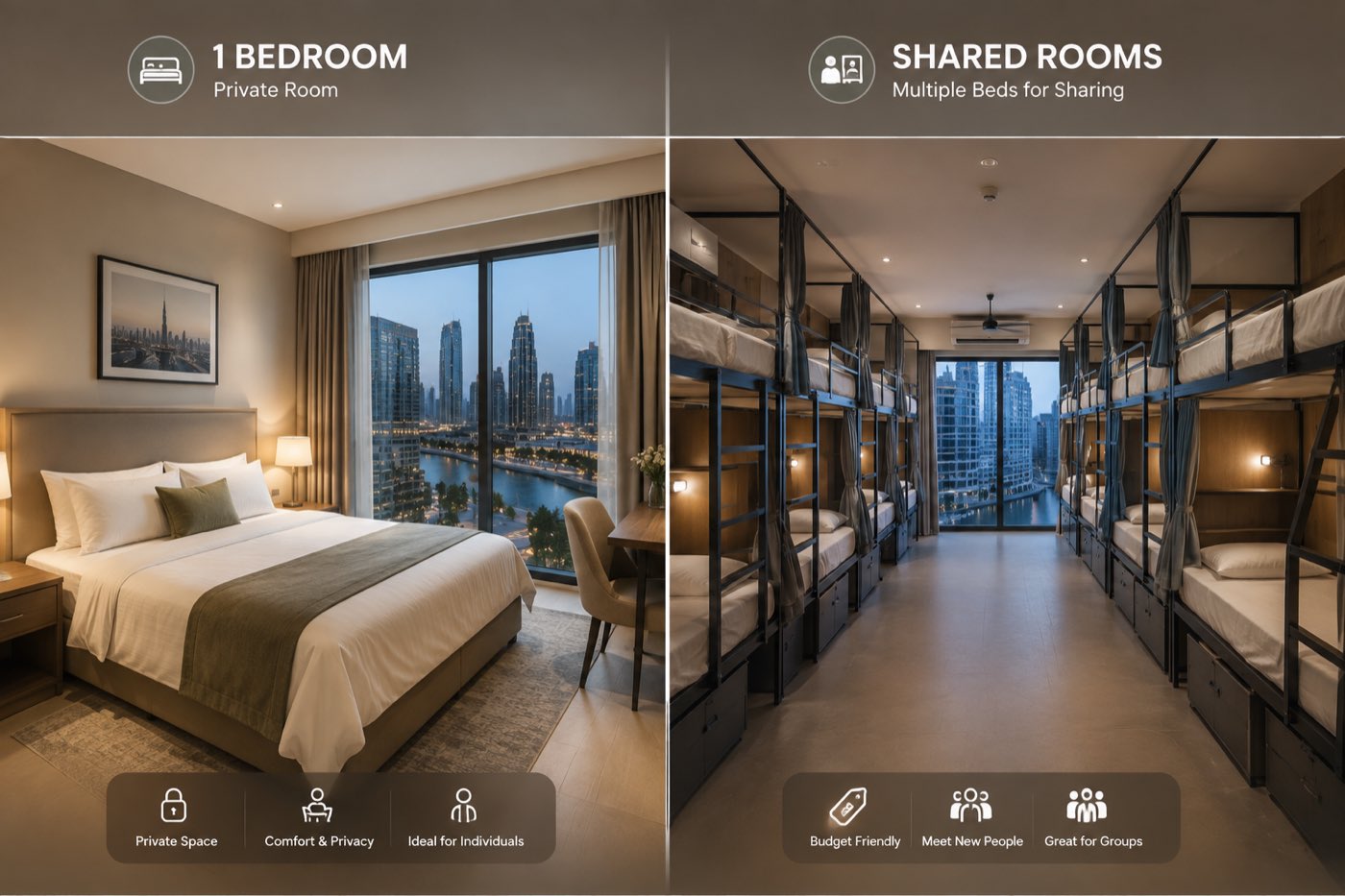
Dubai Shared Housing Law 2026: Permits, Fines, Deadlines
The Dubai shared housing law — Law No. (4) of 2026 — comes into force on 26 August 2026, and it changes the rules for every partitioned flat, shared apartment and bed space in the city. Issued by Sheikh Mohammed bin Rashid Al Maktoum, Vice President and Prime Minister of the UAE and Ruler of Dubai, this is Dubai’s first dedicated law regulating shared housing: every unit used for shared accommodation will need a Dubai Municipality permit, tenants are banned from subletting, and fines run from AED 500 up to AED 1 million for repeat violations. Here is exactly what changes, who is affected, and what the deadlines are.
Dubai Shared Housing Law 2026 — At a Glance
- Law: Law No. (4) of 2026 on the management and occupancy of shared housing in Dubai
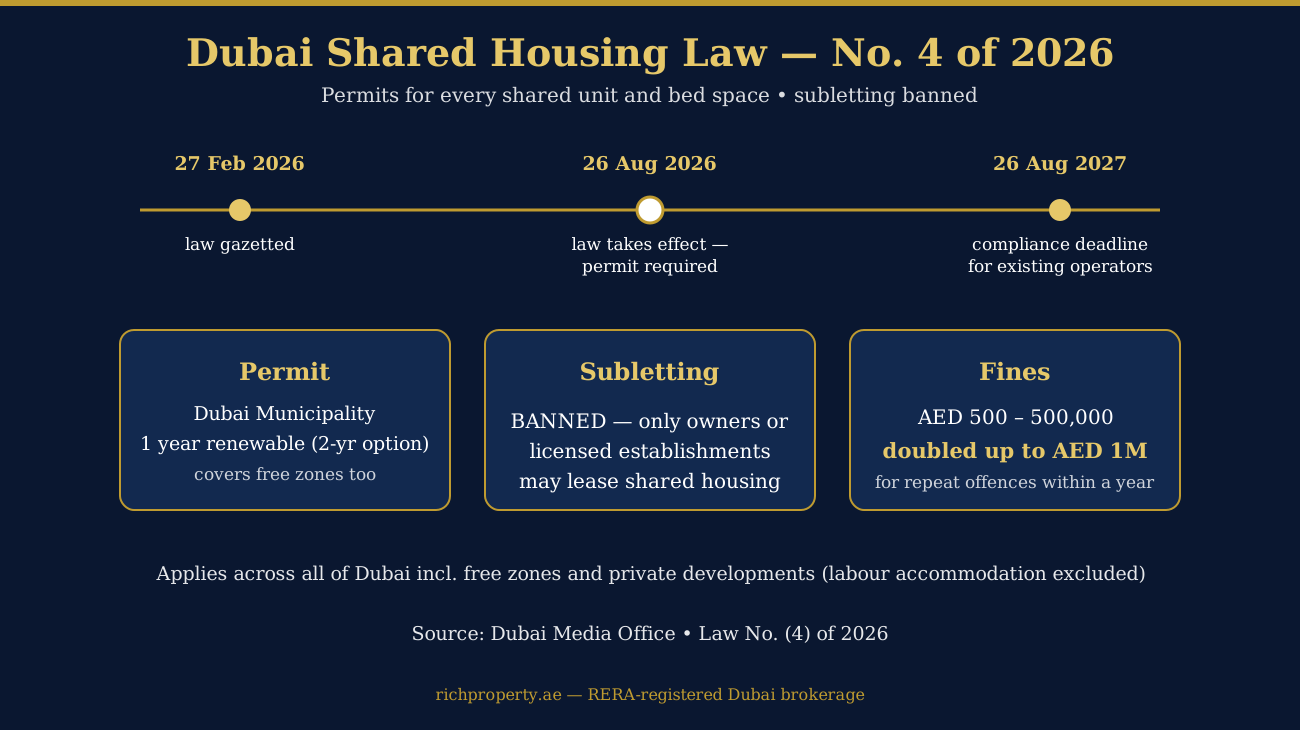
- Effective date: 26 August 2026 (180 days after gazettal on 27 February 2026)
- Core rule: a Dubai Municipality permit is mandatory before any unit is used for shared housing or bed spaces
- Permit validity: 1 year renewable; 2-year permits available at the owner’s request
- Subletting: banned — only owners or licensed establishments may lease shared housing
- Fines: AED 500 to AED 500,000; doubled up to AED 1 million for repeat offences within a year
- Grace period: existing operators have until 26 August 2027 to comply
- Coverage: all of Dubai, including free zones and private development zones (labour accommodation excluded)
What Is Dubai’s New Shared Housing Law (Law No. 4 of 2026)?
Announced by the Dubai Media Office on 11 March 2026, Law No. (4) of 2026 creates a first-of-its-kind comprehensive framework for how shared residential units are managed and occupied in Dubai. Until now, flat sharing, partitioned rooms and bed spaces sat in a grey zone governed loosely by older tenancy legislation and municipal rules. The new law replaces that patchwork with a single system built on three pillars: permits (issued by Dubai Municipality), registration (an electronic Shared Accommodation Register run by the Dubai Land Department) and enforcement (a fine structure that reaches seven figures).
The scope is deliberately wide. The law applies across the entire emirate — including private development zones and free zones — and covers property owners, tenants and occupants of shared units, and establishments licensed to lease or manage units, including subleasing operators. The one explicit carve-out: units designated for collective labour accommodation, which remain under their own regime.
When Does the Dubai Shared Housing Law Come Into Effect?
The law was issued and published in the Official Gazette of the Government of Dubai on 27 February 2026 and takes effect 180 days later — that is, 26 August 2026. Gulf News confirmed the calendar date on 3 August 2026, citing Dubai Municipality.
Two dates matter, and they are different:
26 August 2026 — the law is in force. New shared-housing arrangements must follow the permit rules from this date.
26 August 2027 — the compliance deadline for existing shared-housing owners and operators, who get one year from the effective date to regularise. The Director General of Dubai Municipality may grant a one-time extension, but nobody should plan around getting one.
Shared Accommodation Dubai Permit: How the New System Works
A permit is now mandatory before a unit can be used for shared housing. Note that the permit attaches to the unit, obtained by the owner or licensed operator — it is not something each bed-space tenant applies for. Permits are issued by Dubai Municipality, under rules set by its Director General, in coordination with the Dubai Land Department.
The mechanics:
Validity: one year, renewable for similar periods. A two-year permit can be issued at the owner’s request. Renewal applications must be filed at least 30 days before expiry.
Standards: permitted units must meet technical and safety requirements covering building, health, fire, sanitation, security and electrical standards. Maximum occupancy and minimum space per resident will be set by Dubai Municipality — the exact numeric limits have not yet been published.
Where: Dubai Municipality will designate which areas can host shared housing, based on population density, infrastructure and the character of each area. It also runs the unified digital platform for the system.
Registration: tenancy agreements, management contracts and resident data must be recorded in the DLD’s electronic Shared Accommodation Register, and contracts must state the number of residents and the space allocated per occupant. The DLD will also introduce a rent indicator for shared housing based on unit specifications — a sibling of the smart rental index we covered in our Dubai Smart Rental Index explainer.
Subletting Rules in Dubai: Tenants Can No Longer Sublet
This is the clause that affects the most people day to day. Under the new law, only the property owner or an authorised, licensed establishment may lease out shared housing. Tenants and any other parties are prohibited from subleasing any part of a shared housing unit.
The common Dubai arrangement where a tenant rents a three-bedroom apartment and then re-lets rooms or bed spaces to others becomes a violation once the law bites — unless it runs through a permitted structure. Disputes arising from the law go to one venue only: the Dubai Rental Disputes Centre, which has exclusive jurisdiction.
Shared Housing Fines in Dubai: AED 500 to AED 1 Million
The penalty schedule is the sharpest teeth Dubai has ever attached to housing occupancy rules. Fines range from AED 500 to AED 500,000 per violation, and a repeat violation within one year doubles the fine up to a maximum of AED 1 million.
Money is not the only lever. The law also allows suspension of the activity for up to six months, cancellation of the permit, revocation of the commercial licence, disconnection of public utility services until the violation is fixed, and eviction of occupants.
Is Bed Space Legal in Dubai in 2026?
Yes — but only inside the system. The law does not ban bed spaces or flat sharing; it legalises and regulates them. In practice, the reasonable reading is that a bed space is lawful only when it sits inside a unit holding a valid Dubai Municipality shared-housing permit, offered by the owner or a licensed operator, with the arrangement recorded in the DLD register. A bed space rented from a tenant who has informally partitioned an apartment is exactly what the law targets.
The background here is well documented. In June 2025, Gulf News reported on a crackdown against illegal partitions — bedrooms, living areas and balconies divided with wooden boards or non-fire-rated gypsum panels without Dubai Municipality permits, breaching building codes and fire-safety regulations and in some cases blocking ventilation units and emergency exits. Dubai Municipality, the DLD and Civil Defence ran intensified inspections in Deira, Al Riqqa, Satwa, Al Barsha and Al Raffa, a campaign prompted by a high-rise fire that June. Law No. 4 of 2026 now gives that enforcement a dedicated legal framework.
What the Law Means for Dubai Property Investors
For investors, the signal matters as much as the rules. Dubai keeps professionalising its rental market: the smart rental index, mandatory registration, a coming shared-housing rent indicator, and now a permit regime with real penalties. Regulation of this kind tends to reward compliant, quality stock and squeeze informal operators out.
Three practical takeaways:
Owners of apartments in shared-tenancy areas should decide before the 2027 deadline whether to permit the unit for shared housing or move it to conventional single-family letting — the fines make “wait and see” an expensive strategy.
Co-living operators get what they have long asked for: a licence-based route to run shared housing legally at scale, with a public register that separates them from informal middlemen.
Buyers gain another layer of transparency. If you are entering the market, start with our step-by-step guide to how to buy property in Dubai and our map of Dubai freehold areas where foreigners can buy. And remember the headline incentive: property worth AED 2 million or more can qualify you for the UAE’s 10-year Golden Visa — long-term residency in a market that keeps tightening its rules in favour of owners. Browse current ready properties or off-plan projects to see what fits.
Own it outright — skip the bed-space maze
Rich Property is a RERA-registered Dubai brokerage helping buyers and investors find compliant, high-quality homes — from ready apartments to off-plan launches, including Golden Visa–eligible options from AED 2M. Talk to us on +971 56 887 7078 or email invest@richproperty.ae for honest, current advice on where your money works hardest.
Browse Dubai PropertiesFAQ — Dubai Shared Housing Law 2026
Is bed space legal in Dubai in 2026?
Yes, when it is offered inside a unit that holds a valid Dubai Municipality shared-housing permit and is let by the owner or a licensed establishment. Informal bed spaces sublet by tenants fall outside the law and expose violators to fines from AED 500 up to AED 1 million.
What is Dubai’s new shared housing law (Law No. 4 of 2026)?
It is Dubai’s first dedicated law regulating shared housing, issued by Sheikh Mohammed bin Rashid Al Maktoum and announced on 11 March 2026. It requires a Dubai Municipality permit for every unit used as shared accommodation, bans tenant subletting, and creates a DLD-run Shared Accommodation Register.
When does Dubai’s shared housing law come into effect?
On 26 August 2026 — 180 days after publication in the Official Gazette on 27 February 2026. Existing shared-housing owners and operators then have one year, until 26 August 2027, to comply, with a possible one-time extension from Dubai Municipality’s Director General.
What are the fines for illegal partitions or bed spaces in Dubai?
Fines range from AED 500 to AED 500,000, and a repeat violation within one year doubles the fine up to AED 1 million. Authorities can also suspend the activity for up to six months, cancel permits, revoke trade licences, cut utility services and evict occupants.
Can a tenant sublet a room or bed space in Dubai under the new law?
No. Only the property owner or an authorised, licensed establishment may lease out shared housing. Tenants and other parties are prohibited from subleasing any part of a shared unit, and disputes go exclusively to the Dubai Rental Disputes Centre.
Source: Dubai Media Office statement of 11 March 2026 on Law No. (4) of 2026; Gulf News (3 August 2026, citing Dubai Municipality); Khaleej Times and Gulf News explainers (11–13 March 2026). Details such as occupancy limits await Dubai Municipality’s implementing resolutions. This article is general information, not legal advice.