UAE Freelance, Remote Work and Family Visas 2026 Guide
UAE visas beyond property in 2026: the remote work visa and its USD 3,500 income rule, freelance permit costs by free zone, and family sponsorship thresholds - compared honestly.
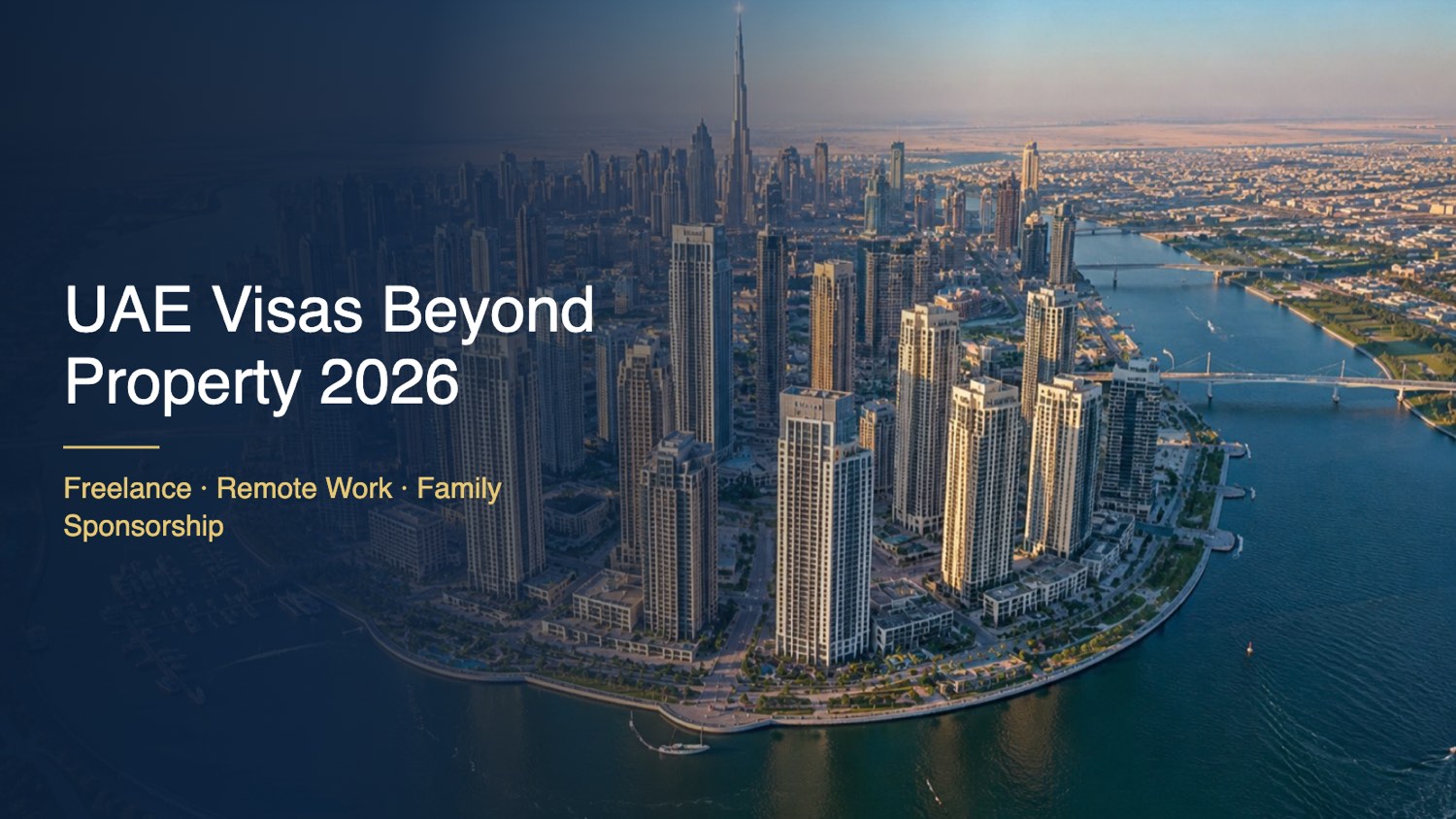
UAE Freelance, Remote Work and Family Visas 2026 Guide
Not everyone moves to Dubai with a company behind them. A growing share of new residents arrive as freelancers, remote employees of foreign companies, or family members sponsored by someone already here — three completely different visa routes that get mixed up constantly.
This guide separates them properly: who each route is for, what it genuinely costs, the income thresholds, and the practical trade–offs nobody mentions at application time.
The three routes at a glance
- Remote work visa (virtual working programme): for employees of companies outside the UAE — requires proof of employment and a minimum income of around USD 3,500 a month; typically the cheapest route
- Freelance visa/permit: for people selling their services independently — issued through free zones or a MOHRE permit; all–in first–year costs commonly quoted between roughly AED 7,500 and 25,000 depending on the free zone and package
- Family sponsorship: a resident sponsoring a spouse and children — generally requires a minimum income from about AED 4,000 a month, with add–on costs of roughly AED 4,000–6,000 per dependant
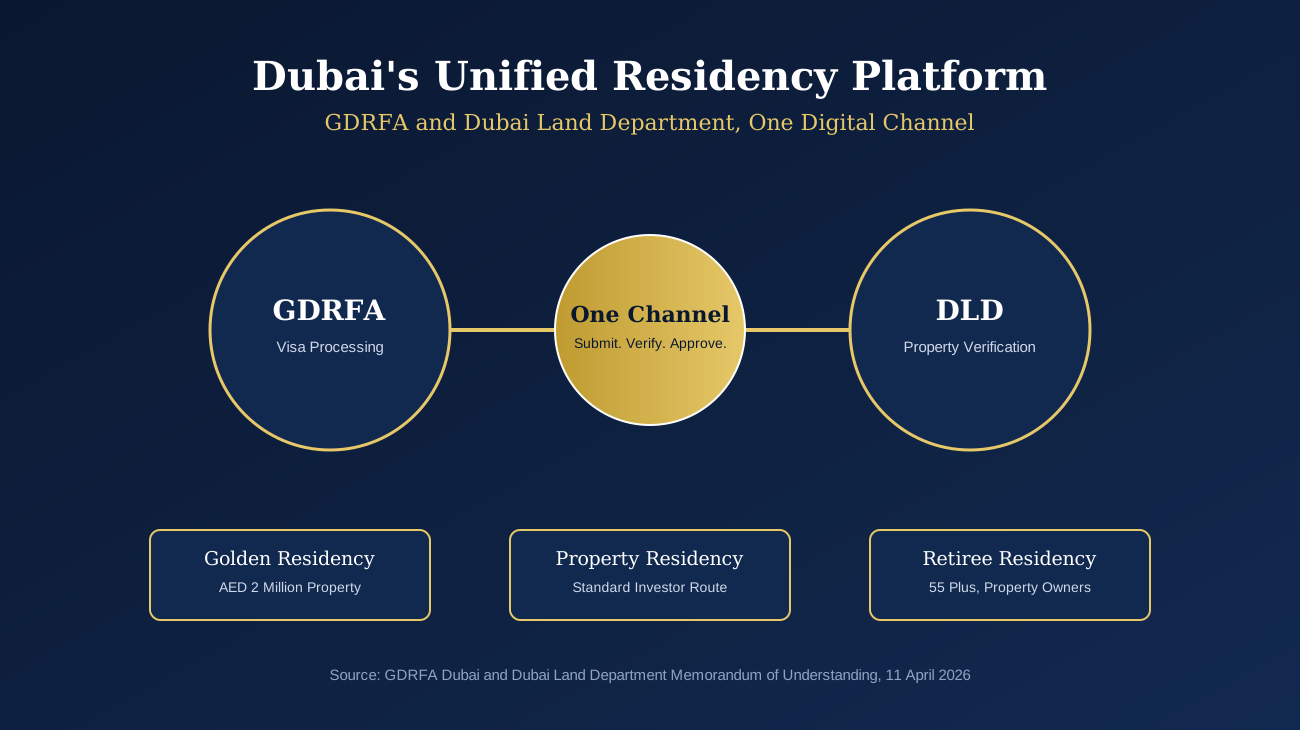
- All three lead to an Emirates ID, and all three can be a first step toward longer residency — including the property Golden Visa at AED 2 million
Route 1: The Remote Work Visa
Officially a “virtual working programme”, this one–year renewable visa lets you live in Dubai while working for an employer or business outside the UAE. It is the misunderstood one: it does not permit you to take UAE clients or a UAE job — your income must come from abroad.
What you need
- A passport valid at least six months
- Proof of employment or business ownership outside the UAE
- Income of about USD 3,500 per month for employees (business owners are commonly asked to show around USD 5,000)
- Health insurance valid in the UAE
Costs are the lowest of the three routes — government fees plus Emirates ID typically land in the low thousands of dirhams, with quoted all–in figures commonly between AED 3,500 and 5,500 through service providers. Apply through official channels: the GDRFA and Amer centres in Dubai, or the federal ICP portal.
Route 2: The Freelance Visa
If your clients are in the UAE — or you want them to be — the remote work visa is the wrong tool. The freelance route gives you a permit to sell your services legally, plus a residence visa attached to it.
The two flavours
- Free zone freelance packages (Dubai Media City, Dubai Internet City, twofour54 and many others): a freelance permit plus visa bundled, with first–year costs commonly quoted anywhere from roughly AED 7,500 to 25,000 depending on the zone, the activity list and what is bundled
- MOHRE freelance permit: the labour–ministry route, generally cheaper for the permit itself, but you still need a residence visa from somewhere — often a family sponsor
Two practical warnings. First, quoted prices online vary wildly because each free zone prices independently and packages change — treat every number as indicative and get a current quote in writing from the zone itself. Second, check the activity list: your specific profession must be on the zone’s permitted list.
Route 3: Family Sponsorship
A UAE resident — employee, freelancer or remote worker — can sponsor a spouse and children once their own visa is issued.
- Income threshold: generally from about AED 4,000 a month (thresholds vary by emirate and case; some free zones apply higher internal requirements)
- Cost per dependant: roughly AED 4,000–6,000 in fees, plus medical tests and mandatory health insurance for each person
- Documents: attested marriage and birth certificates are the usual sticking point — attestation takes time, start early
- Housing: sponsorship requires proof of accommodation — a registered tenancy contract. This is where your Ejari registration stops being paperwork and becomes the document your family’s visas depend on
Which Route Fits Which Person
- Employed abroad, want Dubai life: remote work visa — cheapest, cleanest, renewable yearly
- Consultant or creative with UAE clients: freelance permit through a free zone whose activity list matches your work
- Trailing spouse with professional skills: family sponsorship first, then a MOHRE freelance permit on top — often the cheapest legal way to work
- Planning to stay long–term: any of these plus a property purchase of AED 2 million unlocks the 10–year Golden Visa, ending annual renewals entirely
The Housing Connection
Every route above eventually collides with the same requirement: a registered address. Visa applications and renewals ask for a tenancy contract with Ejari, utility connection needs it, and school admissions ask for it. Our guides cover the practical side: what Dubai actually costs monthly, the new Rent Now Pay Later scheme for paying rent monthly, and buying instead of renting once your visa situation is stable.
Sorting your visa, then your address?
Rich Property is a RERA–registered brokerage in The Opus Tower, Business Bay. We help new arrivals get the housing side right the first time — tenancy contracts registered properly for sponsorship, realistic budgets by neighbourhood, and when the time comes, the AED 2M Golden Visa purchase route with honest numbers.
Browse Dubai PropertiesFAQ - UAE Freelance, Remote Work and Family Visas
Can I work for Dubai clients on a remote work visa?
No. The virtual working programme requires your employment or business income to come from outside the UAE. Taking UAE clients requires a freelance permit or employment visa.
How much does a freelance visa really cost?
It depends on the free zone and package — credible 2026 quotes run from roughly AED 7,500 to 25,000 for the first year all–in. Get a written quote from the specific zone; online figures date quickly.
What income do I need for the remote work visa?
About USD 3,500 a month for employees, with business owners commonly asked to evidence around USD 5,000, plus proof the income source is outside the UAE.
What salary do I need to sponsor my family?
Generally from about AED 4,000 a month, though thresholds vary by emirate and employer type. Budget roughly AED 4,000–6,000 per dependant in fees plus insurance.
Can a freelancer sponsor a spouse and children?
Yes — freelance and remote work visa holders can sponsor dependants for the same duration as their own visa, subject to the income and accommodation requirements.
Do any of these lead to long-term residency?
They are all one- to two-year renewable visas. The 10–year Golden Visa runs on separate criteria — including property ownership of AED 2 million or more, which many settled freelancers use to exit the renewal cycle.
Sources
Sources: UAE government portals (u.ae, ICP, GDRFA Dubai) for the virtual working programme structure and family sponsorship framework; free zone published packages and 2026 relocation–industry guides for indicative freelance costs. Visa fees, income thresholds and requirements change frequently and vary by emirate, free zone and applicant profile — every figure here is indicative, and you should confirm current requirements on official channels (u.ae, GDRFA, Amer centres or the relevant free zone) before applying. This article is general information, not immigration advice.